When I look back at how I’ve spent my free time over the years, two things stand out as lifelong constants—video games and tabletop games. From long nights exploring the worlds of Morrowind and Skyrim, to afternoons spent painting Warhammer 40K miniatures and setting up battles across the dining table, these hobbies have been more than just entertainment. They’ve been teachers.
Digital and physical gaming might seem completely different on the surface—one built on pixels and processors, the other on paint, dice, and imagination—but both have shaped how I think, create, and connect with others. They’ve taught me lessons about patience, creativity, and community that have carried into every part of my life, from parenting to art to faith.
Building and Believing in Worlds
The first thing that draws me to both kinds of play is world-building. I’ve always loved games that pull me into a rich, detailed setting—something bigger than myself. When I boot up Skyrim, I’m stepping into a vast landscape filled with ancient ruins, magic, and mystery. When I set up a Warhammer 40K army, I’m bringing a whole universe of lore to life right on my table.
In both cases, I’m not just a spectator—I’m a participant. I get to shape stories, make choices, and watch consequences unfold. There’s something deeply satisfying about that creative involvement. It reminds me of painting or writing: the act of creation itself brings meaning.
The difference is that digital worlds already exist. Someone else has built them; I just explore and interact. Tabletop games, though—they rely on imagination. I have to fill in the blanks, build the scenery in my mind, and bring that universe to life with my own hands. That physical process makes it feel more personal. It’s not just about what’s on the table—it’s about what’s in your head.
The Patience of Play
One of the biggest contrasts between video games and tabletop gaming is the pace. Video games move fast. The story is waiting, the next mission is queued up, and there’s always a new challenge right around the corner. I love that energy—it’s immersive, it’s exciting, and sometimes, it’s exactly what I need to unwind after a long day.
But tabletop gaming is a different rhythm altogether. It’s slower, more deliberate. You spend time preparing your models, reading lore, setting up the board, and rolling dice. There’s a ritual to it that feels almost meditative.
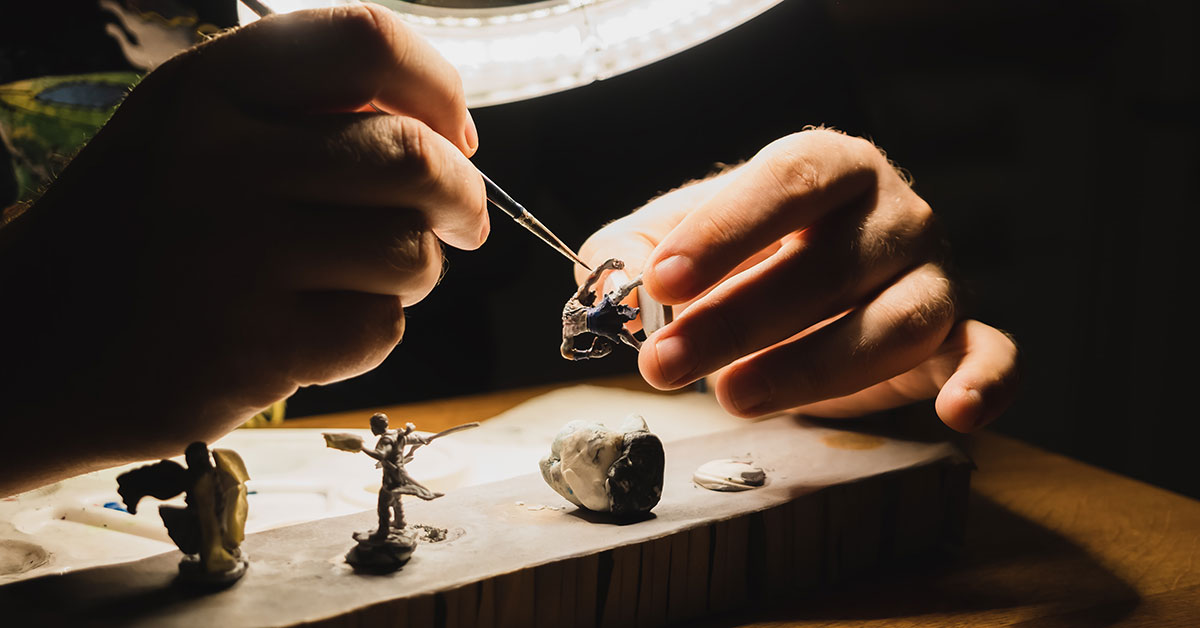
When I sit down to paint a miniature or assemble a model, it takes focus. You can’t rush it. You have to slow down, pay attention to the tiny details, and accept that mistakes will happen along the way. I’ve come to see that process as a kind of life lesson. Not everything needs to happen quickly. Sometimes it’s okay to move slowly, to take your time building something, even if no one else sees the final result.
That patience spills over into parenting and caregiving too. Kids, like miniature figures, can’t be “fast-tracked.” You guide, shape, and nurture, one small step at a time. It’s not instant gratification—but the results are worth every bit of the effort.
Connection Through Play
Another big difference between the digital and physical worlds is how they connect people. Video games, especially online ones, let you interact with others across the world. I’ve played Team Fortress 2 with friends who live hundreds of miles away. There’s something special about that kind of instant connection, that ability to share a laugh or a win without being in the same room.
But there’s also something irreplaceable about sitting around a table with real people, dice in hand, joking between turns, and building a story together. The social side of tabletop gaming hits differently—it’s tactile, immediate, and full of small, human moments.
In a world where so much of our communication happens through screens, I find that balance really grounding. Both types of play connect us—but in different ways. Online play connects minds; tabletop play connects presence. Both matter.
Creativity Without Limits
One of the biggest joys of both hobbies is how they feed creativity. In video games, I get inspired by world design, music, and storytelling. Games like The Elder Scrolls or Zelda make me want to paint landscapes or write my own stories. They remind me how powerful imagination can be when it’s shared.
On the tabletop side, creativity is even more hands-on. When I paint Warhammer miniatures, I’m not just following a set of rules. I’m interpreting a universe through color, texture, and style. Every figure tells a story, and every army has a personality.
I’ve also learned not to get hung up on perfection. Sometimes the paint smudges or a model doesn’t turn out quite how I pictured it—but that’s okay. Just like in art and life, mistakes can add character. Whether it’s digital art or physical modeling, the creative act itself is what matters most.
The Balance Between Worlds
As I’ve gotten older, I’ve realized that the best approach isn’t choosing between digital and physical play—it’s appreciating both for what they offer. Some days, I want the energy and immediacy of a video game, where I can jump into another world and lose myself for an hour. Other days, I crave the quiet focus of painting or setting up a tabletop battle.
Both forms of play give me something valuable. One gives me escape; the other gives me grounding. One challenges my reflexes; the other strengthens my patience. Together, they keep me balanced.
And honestly, they both remind me of something important: imagination is a gift. Whether I’m exploring a virtual landscape or crafting a miniature fortress, I’m still doing the same thing I did as a kid in Watkinsville—building worlds, telling stories, and finding joy in creation.
People sometimes see games as a way to disconnect from reality, but for me, they’ve always done the opposite. They’ve connected me more deeply to creativity, to friendship, and even to faith. Both digital and physical play remind me that there’s beauty in both structure and spontaneity—in planning and in play.
At the end of the day, the lesson is simple: it doesn’t matter whether the battlefield is on a screen or a table. What matters is that spark of imagination that brings it to life. Because in both worlds—real or imagined—we’re all just trying to tell stories, create meaning, and have a little fun along the way.